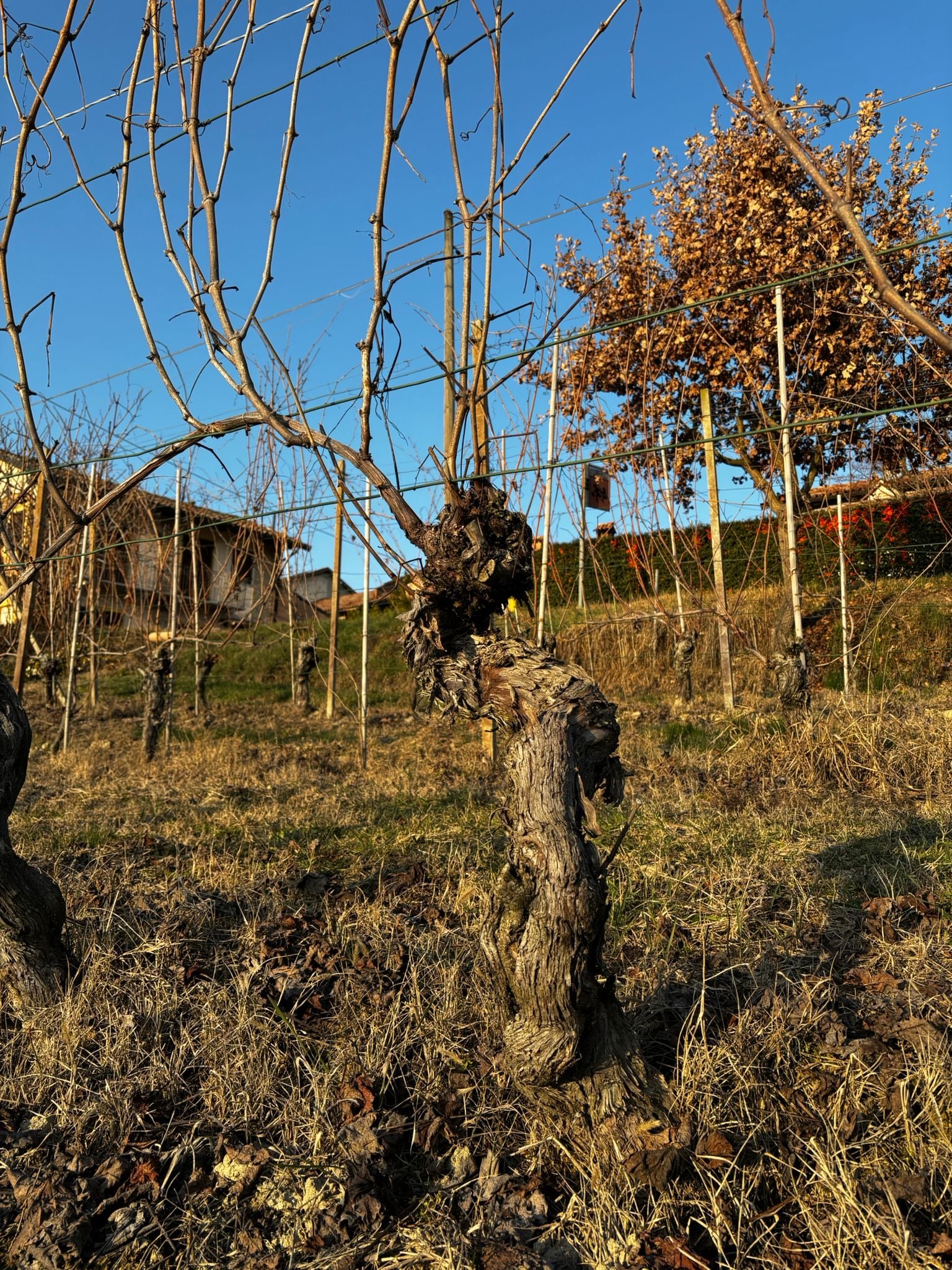
Winter Pruning: A Fundamental Task That Shapes the Future of the Vine
With the arrival of winter and the vine’s dormancy, one of the most delicate and important moments of the growing year begins in our vineyards: winter pruning. A silent task, carried out amidst bare rows and cold days, yet it lays the foundation for the quality of the future harvest.Many factors influence the character and elegance of a wine—from terroir to climate, from vintage to exposure—but pruning represents the first true balancing act between plant and man, between production and quality.
When and Why to Prune in Winter?
Winter pruning is performed during the vine’s dormancy period, generally between leaf fall and the beginning of spring weeping. At this stage, the plant has accumulated its reserves and can face the pruning without stress, best preparing for the resumption of growth.
Pruning means choosing: deciding how many shoots to leave, where to direct the plant’s energy, and how to distribute future production. Each cut is a decision that will influence:
- the vigor of the vine
- the quantity of grapes produced
- the quality and concentration of the bunches
- the longevity of the vineyard
The Guyot Method in Our Vineyards
In our vineyards, we use the Guyot breeding and pruning method, a traditional form of training used in the Langhe and Roero regions and particularly suited to our grape varieties and the characteristics of the terroir.
Guyot allows us to control production, maintaining a limited number of buds and thus ensuring better concentration and quality of the grapes. At the same time, it allows for proper placement of the shoots, promoting good exposure to sunlight and balanced canopy management during the growing season.
How Winter Pruning Works Technically
Winter pruning is a dry pruning procedure, performed when the vine is dormant. The goal is to correctly establish the plant’s structure, regulate production, and maintain its health over time.
In our vineyards, we adopt a pruning method that involves the selection of two main shoots: the fruiting canopy and the renewal canopy (or spur).
1) Removal of the previous season’s fruiting canopy and selection of shoots
First, the shoot that produced grapes in the recent year is removed. This frees up space for new shoots and promotes vegetative renewal. Next, a vigorous shoot close to the head of the plant is chosen to limit wood elongation and maintain an orderly structure; this will be the fruiting canopy.
The Fruiting Canopy
The fruiting canopy is the shoot destined to produce the year’s production.
It is left with a variable number of buds, generally 8–10 buds, depending on the grape variety, the plant’s vigor, and the vineyard’s conditions. Subsequently, in spring, the fruiting canopy is bent and tied horizontally to the support wire, promoting uniform sprouting along its entire length.
2) The Renewal Canopy (or Spur)
A renewal canopy is left next to the fruiting canopy, pruned short to two buds.
This shoot does not have an immediate productive function, but represents a reserve for the following year: from here, the new fruiting canopy will be selected, ensuring continuous production and proper wood turnover.
3) The Correct Cut
The cut is made cleanly and at an angle, approximately 1–2 cm above the last bud, to facilitate water drainage and reduce the risk of infection. Particular attention is paid to respecting the plant’s sap flow, avoiding excessively large or untidy cuts that could compromise the vitality of the vine.

A work of balance and knowledge
Each vine is observed individually, taking into account its age, vigor, location in the vineyard, and the previous year’s performance.
The goal is to maintain a constant balance, avoiding excessive production that would deplete the quality of the grapes while also ensuring the continuity and health of the vine over time.
In the vineyard, the pruner’s experience is fundamental: reading the plant, interpreting its growth, and accompanying it season after season is a skill that combines tradition, manual skill, and agronomic knowledge.
Preparing the vine for light and air
Proper winter pruning also allows for optimal canopy development during the growing season.
A well-balanced structure promotes:
- good exposure of the leaves to sunlight
- proper aeration of the bunches
- more effective management of ripening
All elements that contribute to obtaining healthy, high-quality grapes, capable of best expressing the Langhe and Roero terroir.
Winter pruning is the result of centuries of observation and practice, refined over time and now supported by scientific studies. It’s a moment when viticultural tradition meets the future vision of wine, because it’s precisely in winter that the foundations for the coming vintage are laid.
In our Neive vineyards, this work is carried out with respect and care, knowing that these simple yet fundamental gestures shape the identity of our wines.

Subscribe to our newsletter
Sign up for our newsletter to stay up-to-date on the latest Francone Vini news and receive exclusive offers and events related to our wines.